top of page


And He Who Can Ask
Lev Shimon (editor)
Published August 1998. 238 pages, paperback
14 monologues of "becoming secular", the stories of men and women born into a closed religious community who nevertheless dared ask. People tired of the one, limited, 'way' who prefer the non-clarity of an open society, a culture that offers different answers and allows new questions, leaving the individual the right, the duty, to chose for him- or-her-self.

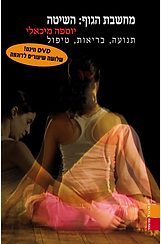
Body Cognition
Michaeli Yosefa
Published June 2009. 397 pages, paperback
For the first time since developing the “Body Cognition” method in the 1960s and 1970s, Yosefa Michaeli presents a full theoretical framework: a detailed explanation enriched with examples, demonstrations, and practical tools for applying the method. The book also examines its connections to fields such as personal development, learning, thinking, and behavior.


Living Forms: Architecture and Society in Israel
Cohen S. and Amir T (editors)
Published January 2008. 302 pages, paperback
A collection of articles exploring Israel’s common living forms through architectural, aesthetic, and cultural analysis. Focusing on housing within the Green Line, the contributors examine how architecture and society intersect — how ethnic, national, and class identities shape living environments, and how housing design expresses ideology and social concepts.
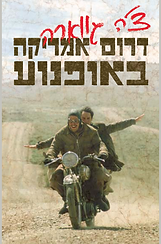

Notes on Epiphany
Hirschfeld Ariel
Published May 2006. 216 pages, paperback. also by Hirschfeld Ariel Where is Time?
Sixty days after Batia Gur’s death, Ariel Hirchfeld began writing what became his most personal book. In Notes on Epiphany he speaks to and about her, recounting the central moments in his life and the history of his heart — moments of revelation, love, and the struggle to face what cannot be expressed in life itself: death.


Picking on the Weak
Caspi Arie
Published July 2007. 332 pages, paperback Edited by Amihai Gur and Nahum Yehoshua.
A selection of Arie Caspi’s columns from 1986–2003, originally published in Koteret Rashit and Ha’aretz. Caspi wrote chiefly about society and economy, waging a sharp, well-reasoned battle against the decline of the welfare state and the rise of privatization. He forcefully critiqued the injustices of neo-liberal ideology, while also addressing political, military, and religious issues. His independent thinking and steady worldview — never dogmatic — earned him wide influence and made him a compass for many readers.


Refusenik! - Israel's Soldiers of Conscience
Kidron Peretz (editor)
Published April 2004. 207 pages, paperback
Hundreds of Israeli soldiers, called up for controversial campaigns such as the 1982 invasion of Lebanon or policing duties in the Palestinian territories, have refused orders — often choosing prison over taking part in what they see as an unjust occupation. Peretz Kidron, himself a refusenik, brings together the stories, reflections, and even poetry of these conscripts who believe in their country but not in its actions beyond its borders. Born in Vienna in 1933 and raised in England, Kidron emigrated to Israel, became a longtime peace activist, and co-authored Palestinian activist Raymonda Tawil’s memoir My Home, My Prison.

Sheikh Jarrah
Ben-Yair Michael
Published May 2013. 48 pages, paperback
Before the 1948 war, Jews and Arabs lived side by side in the Sheikh Jarrah neighborhood. After hostilities began, the Jewish residents were evacuated and later compensated by the State of Israel for their lost property. Since 1967, however, Jews have returned and evicted Arabs from homes they had lived in for decades. In clear, direct language, Michael Ben-Yair highlights the moral flaws and legal contradictions in laws that allow Jews to reclaim property for which they were already compensated, and offers alternative solutions.

Square Song Circle – Space and Democracy in Israel
Amir Tula (editor)
Published March 2025. 248 pages, paperback
A collection of articles examining aspects of the link between democracy and space as exemplified in demonstrations, protetsts in the public space, imagined spaces, communal spaces, urban spaces, private space and the virtual space.

State Witness
Sarna Igal
Published May 2007. 479 Pages, paperback
State Witness is the summary of Igal Sarna's journalistic work since the Lebanon Invasion of 1982 up to the Gaza pullout in 2005: This is a personal journey to the occupied territories and back, on and on for hundreds of times, to a burning, beaten and fighting region, an hour drive from the Tel Aviv cosy espresso bar.

Tamrurot - Feminisn and Space in Israel
Amir Tula (editor)
Published June 2017. 236 pages, paperback
Among all the road signs in Israel there is only one that has a woman in it! This book examines, in 14 essays and 2 works of art, Israeli space - past and present - from a feminist point of view, and discusses issues that went answered by man planners.


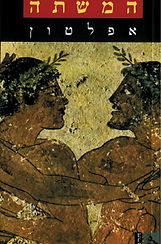
The Garden of Epicurus
Malkin Yaakov
Published August 2013. 155 pages, paperback
In view of the growing power of religion, or at least its expressions in the public domain, this book offers an alternative, an alternative through which older generations were liberated from the authority of religion a humanistic atheistic belief that allows for a Jewish secular identity.
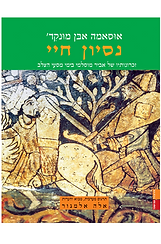


Women of the South: Space, Periphery, Gender
Dahan-Kalev H., Yanay N. and Berkovitch N. (editors)
Published November 2005. 254 pages, paperback
Women of the South brings together research presented through multiple forms — academic writing, photography, recordings, bio-poetics, and interviews — to create an interdisciplinary dialogue about north–south and center–periphery dynamics. The book explores how these spatial divisions shape the lives of women in Israel’s south, influencing their experiences, identities, and capacities to act. A joint project of the Ben-Gurion Institute for Israel Studies, Ben-Gurion University Press, and Xargol Books.

Winter in Qalandia
Nirgad Lia
Published April 2004. 206 pages, paperback
In the fall of 2003, novelist Lia Nirgad joined Machsom-Watch — an Israeli women’s group monitoring military checkpoints in the Palestinian territories — and began weekly shifts at Qalandia, between Ramallah and Jerusalem. There she observed the agonizing encounters between a crushed civilian population and an unyielding military system. Winter in Qalandia grew out of this commitment: for 16 weeks Nirgad wrote nonstop, weaving everything she witnessed into a dynamic, insightful text. Written in the present tense, each shift reads like a short story, centered on specific people and moments.


Separation: The Politics of Space in Israel
Haim Yakobi, Shelly Cohen (editors)
Published April 2007. 197 pages, paperback
A collection of essays and photographs casting a critical light on Israel’s growing ethnic, national, and class separation — and its physical manifestations. The texts and images explore locations where spatial divisions separate Jews and Arabs, Sephardi and Ashkenazi Jews, and rich and poor, while shaping distinct forms of social power.

Not only Kafka and the Golem
Bondy Ruth
Published October 2014. 320 pages, paperback
Ruth Bondy, the great journalist, writer and translator, tells the story of the Jews of Czechoslovakia in her own special way, combining personal stories, memoirs, archival research and literary texts. She discusses the history of Jewish names in central Europe, the role of food, the language Jews have been using among themselves, the move to Israel and much more.
bottom of page